
Trade guide
Marketing ideas for local flower shops
Concrete marketing ideas for local flower shops: fresh arrivals, holidays, weddings, sympathy, Google Business, Instagram, Email, and reviewable campaigns.
Laurent Raffalli, founder of AdSpark, documents practical small-business marketing methods and checks the content against capabilities that are actually available.
Direct answer
The best marketing ideas for a local flower shop start from moments when flowers are urgent, emotional, or seasonal: fresh arrivals, holidays, birthdays, weddings, sympathy, thank-you gifts, or last-minute orders. A useful campaign shows what is available, explains how to order or reserve, and adapts the same idea for Google Business, Instagram, Facebook, Email, or customer messages.
Why this angle works
For a business like a flower shop, the strongest angle starts from a real moment: availability, customer proof, seasonal demand, a frequent question, or a limited offer. The message should name the area, the next step, and how it will be adapted for Instagram, Google Business, Facebook.
In AdSpark
The same idea becomes Email, Facebook, Instagram, Google Business, LinkedIn, and WhatsApp versions ready to review before publishing.
Method in 5 steps
- 1
Pick one florist moment: morning arrival, seasonal bouquet, Mother's Day, Valentine's Day, wedding inquiry, sympathy order, office subscription, or last-minute gift.
- 2
Name the local buyer: regular customers, nearby offices, neighborhood foot traffic, couples planning an event, families, or people ordering from out of town.
- 3
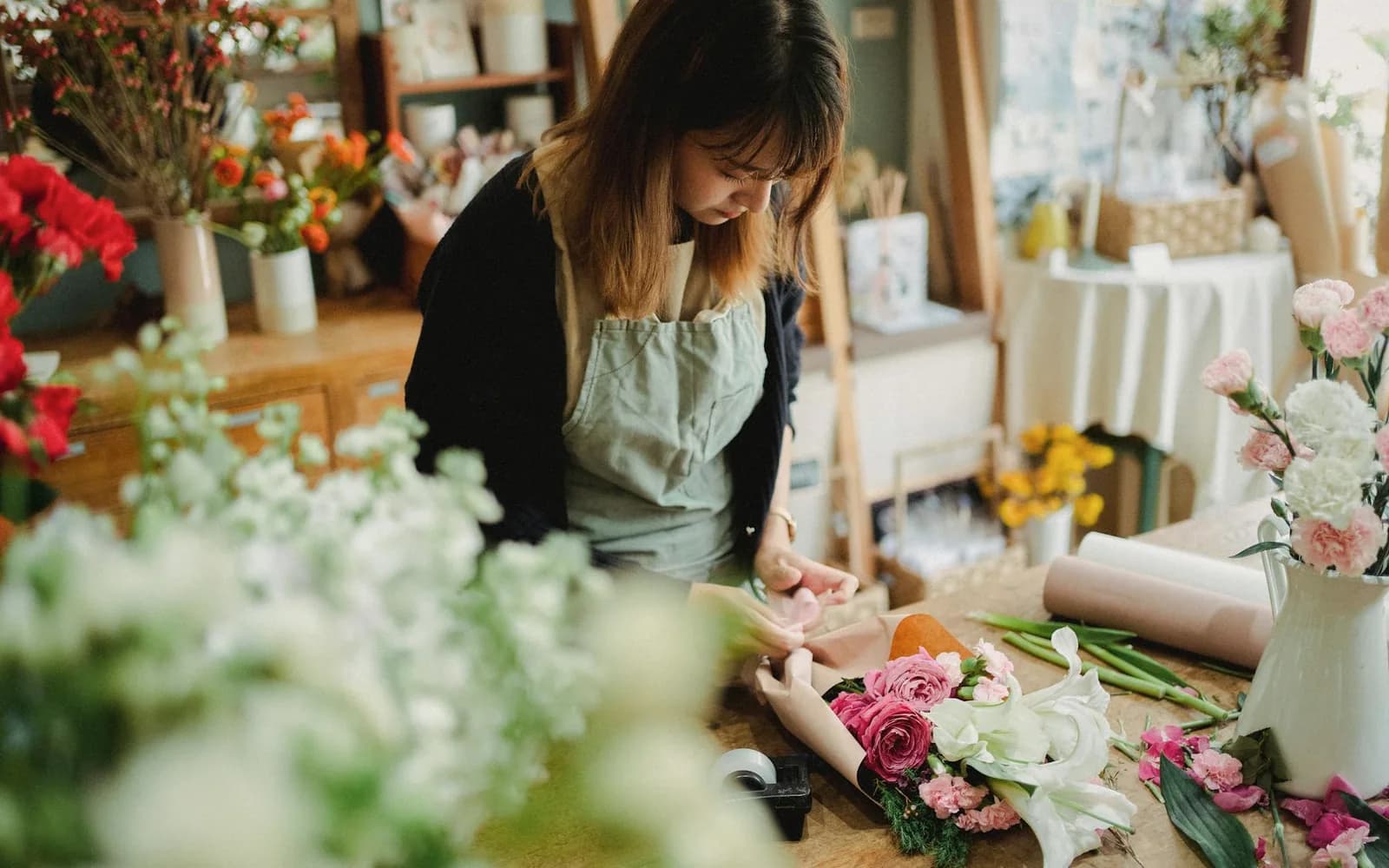
Use real visual proof: ready bouquet, storefront display, color palette, workbench photo, or arrangement example, without inventing reviews or results.
- 4
Adapt the idea by channel: Google Business for practical details, Instagram/Facebook for the visual hook, and Email or WhatsApp for existing customers.
- 5
Review dates, stock, delivery area, opening hours, and ordering conditions before publishing or sending.
Examples to adapt
- Fresh arrival: `Peonies arrived this morning. Reserve a bouquet before 4 p.m. or stop by the shop while today's stems last.`
- Last-minute gift: show three ready-to-pick-up arrangements with color, occasion, order deadline, and pickup or delivery step.
- Wedding inquiry: share a seasonal color palette and invite couples to request a first consultation, without promising availability until confirmed.
- Sympathy or thank-you: write a calm message with arrangement options, local delivery, and direct contact instead of turning it into a hard sale.
- Multichannel campaign: one flower-shop moment can become a Google Business update, Instagram caption, and customer email ready to review.
- Instagram: announce availability or an offer with area, proof, and next step.
- Google Business: show a photo, before/after, or recent job with a short hook.
- Facebook: follow up with existing customers using a useful, reassuring message.
- Prepare in AdSpark: a flower shop campaign ready to review in minutes.
Four campaign moments for a flower shop
Sales depend on seasons, events, and emotional moments that cannot be missed. To avoid generic posts, every campaign should start from a situation customers can understand and verify. AdSpark prepares campaigns for Valentine’s Day, Mother’s Day, weddings, sympathy, and arrivals.
- Real availability: announce a specific slot, lead time, or capacity for a flower shop, then update the message when the situation changes.
- Recent proof: show approved work, a product, a place, or a result, explain the context, and avoid claims that cannot be demonstrated.
- Frequent question: answer a customer hesitation with selection criteria, service area, timing, and one next step.
- Seasonal moment: remind customers before demand peaks without fake urgency or an invented discount.
Which channel should a flower shop use?
The same copy should not be pasted everywhere. Each channel supports a different part of discovery, proof, or follow-up.
| Priority channels | Role | Content to prepare | Check before distribution |
|---|---|---|---|
| Help nearby customers find the business or get a practical update. | Area, availability, service or offer, real proof, and one action for the flower shop. | Check hours, address, availability, phone number, and link. | |
| Google Business | Show the activity and build local repetition. | Approved visual, concrete hook, short context, and next step. | Check image rights, price, date, and expected replies. |
| Follow up with people who already know the business. | Specific subject, benefit, practical detail, and reply or booking action. | Check consent, recipients, and sending frequency. |
A weekly marketing routine for a flower shop
A useful routine starts with ten minutes of collection: open slots, common requests, approved photos, deadlines, and customer feedback. The owner then chooses one priority topic instead of producing unrelated messages simply to fill a calendar.
Review the campaign as business information: is the promise accurate, can the customer understand the service area and timing, and does the call to action lead to a contact method that is actually monitored? Calls, bookings, quotes, replies, and visits are more useful signals than post volume.
- Monday: choose the business moment and collect the facts.
- Tuesday: prepare distinct versions for Instagram, Google Business, Facebook.
- Before distribution: check contact details, prices, dates, stock, availability, and rights.
- End of week: record the enquiries and decide what is worth repeating.
Before publishing
Local check before publishing
Check the details that help a nearby customer understand the offer, find you, and take action without guessing.
- Clear area:city, neighborhood, service radius, meeting point, or delivery zone.
- Consistent contact details:business name, address, phone number, hours, and booking link match your other profiles.
- Verifiable proof:approved photo, real review, recent example, or result explained without a guaranteed promise.
- One next step:call, book, request a quote, visit the shop, or send a message.
Try it for free
Turn the guide into a result for your business
These tools use your real business context to prepare ideas or posts for review, without creating an account or publishing automatically.
Useful guides to continue
Common questions before publishing
What marketing idea should a florist publish first?
Start with a concrete moment: fresh arrivals, an upcoming holiday, ready bouquets, last-minute orders, or a local delivery service. Add a photo, deadline, and one ordering step.
Should flower shops only market around major holidays?
No. Seasonal bouquets, care tips, subscriptions, weddings, sympathy orders, thank-you gifts, and local partnerships keep the shop visible between Valentine's Day and Mother's Day.
Which channels work best for a local flower shop?
Google Business is useful for hours, delivery, and local offers. Instagram and Facebook show arrangements, while Email or WhatsApp can remind existing customers about timely occasions.
Which channel should a flower shop start with?
Start with Google Business for local search, then add Instagram/Facebook for visual proof and Email or WhatsApp for existing customers.
How much time should this take?
A realistic routine fits into 10 to 20 minutes per week: one idea, three message variants, one publishing slot, and one follow-up.
Do I need paid ads first?
Not first. A small business often gets more from local consistency, customer proof, and clear messages before using complex paid campaigns.